
Miško Hevery
Chief Technology Officer, Builder.io | USA
Talk
Qwik - The Future Of Web Development
“How can a technology which is still in Beta be considered the next big web development framework?”
Well… based on my experience, the research I’ve done and the thorough analysis of the past 26 years of web development and the patterns that emerged along the way… All signs show that we’re at the beginning of a new generation of web frameworks.. and based on how this future will look like, Qwik is years ahead in making it a reality now.
The change is coming, it’s inevitable and it has already begun!
Luckily for us web devs it comes with lots of cool and exciting new technology innovations and opportunities reserved for early adopters.
So what are the patterns I discovered that no one else is talking about? What will be the mainstream way to develop web apps in the future? Why did I decide to put my chips on Qwik as the right investment to make?
All of that and more will be revealed in this talk.
About Miško Hevery
Miško started his career designing digital circuits and moved to databases, full-stack development and finally, front-end frameworks, giving him a unique perspective. He understands all of the layers from the web down to a transistor. In addition to Google, he worked for tech powerhouses Adobe Systems and Sun Microsystems.
He holds an MS/BS from Rochester Institute of Technology and an MBA from Santa Clara University.
Workshop
Building Fast WebApplications - Master Class
Let's look into the anatomy of a slow site and dissect it to find out how each issue got there and why fixing it is not a trivial exercise. Understanding the problem is the first step. Next is to think about possible solutions to prevent this.
Agenda:
- Anatomy of a slow site
- JavaScript over time: it is here to stay, and it is getting bigger
- JavaScript is single-threaded => CPUs cores are increasing
- Understanding the PageSpeed budget
- Third-party code
- Web-workers
- First-party code
- Hydration problem => front load JS
- Lazy loading problem => can't lazy-load visible components
- How can we have pull rather than push model of JavaScript
- Resumability is a possible solution => but it is hard
Miško Hevery in action
Learn from the Best Featured Speakers

Ryan Carniato
Creator of SolidJS, Netlify | USA

Nishu Goel
Engineer (Web + Golang), GDE, epilot GmbH | Germany
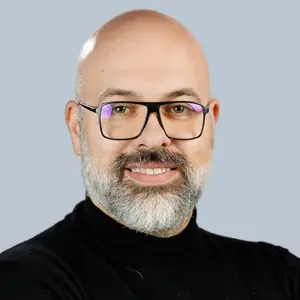
Miško Hevery
Chief Technology Officer, Builder.io | USA
Luca Mezzalira
Principal Serverless Specialist Solutions Architect, AWS | UK

Shai Reznik
Founder, HiRez.io | Israel

Adam Bradley
Director of Technology, Builder.io | USA

Michael Hladky
Trainer and consultant, push-based.io | Austria

Karin Angel
Full Stack Team Lead, Sapiens | Israel

Nir Kaufman
Front End Guild Manager, Next Insurance | Israel

Arisa Fukuzaki
Developer Relations Engineer, Storyblok | Germany

Konrad Mattheis
CTO, Vizlib | Germany

Sebastian Gos
Development Manager, BEC | Poland

Piotr Tomiak
Senior Software Developer, JetBrains | Poland

Kamil Gałek
Senior Frontend Developer, BigPicture | Poland

Sam Bellen
Staff Developer Advocate Engineer, Auth0 | Belgium

Santosh Yadav
GDE, Senior Software Engineer, Celonis | Germany

Michał Jawulski
Managing Delivery Architect, Capgemini | Poland
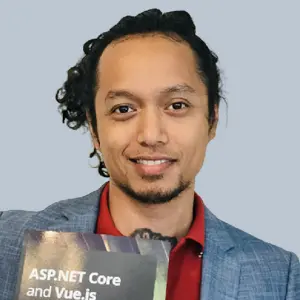
Devlin Duldulao
Senior Consultant, Inmeta | Norway
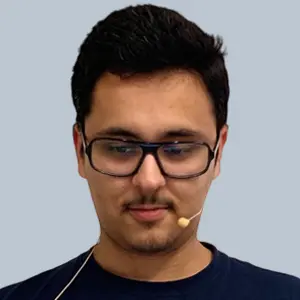
Daniel Afonso
Developer Advocate, OLX | Portugal
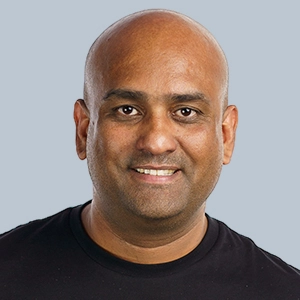
Dhananjay Kumar
Teacher and Consultant, ngIndia | India

Sebastian Witalec
Head of DevRel, SeMI Technologies | Denmark


Companies that support our community
Our Sponsors
By becoming a sponsor of JS Poland you will get an excellent opportunity to showcase your
company and products to
1000 most active European developers.
Such exposure will definitely help you to generate interest in your company, as well as allow
you
to find new business partners and potential employees.
To learn more about our sponsorship offer, please fill in the form.
Platinum Sponsor

Gold Sponsor

Gold Sponsor

Gold Sponsor

Gold Sponsor

Silver Sponsor

Silver Sponsor

Special Sponsor

Special Sponsor

Special Sponsor

Special Sponsor

Join our mailing list
Sign up to receive updates about JS Poland, including workshops, speaker previews, ticket launches, JS Awards, JavaScript Master Podcast, Behind the Code Magazine, CFP details and other exclusive content. We won’t spam you and will only send you emails we genuinely think you’ll find interesting. You can unsubscribe at any time and you can find more information here.